Showing posts with label infant toddler daycare in surrey. Show all posts

Friday, 18 August 2023

What benefits of Montessori Preschool Surrey over other options?

Education is the cornerstone of a child's future, and the kind of preschool they attend can have a big impact on how they develop. For their distinctive approach to early childhood education, Montessori schools and Montessori childcare in surrey, a widely respected educational system, have won praise. In Surrey, a prospering community in British Columbia, Canada, Montessori preschool enrollment has increased.

The best preschool for a child should be chosen with great care. Montessori preschools in Surrey provide a method that skillfully combines rigorous academics with holistic development for parents. The Montessori approach stands out as an appealing choice for those looking to provide their children with a well-rounded foundation thanks to its emphasis on individualized learning, creativity, and life skills. 

Montessori childcare near me, Montessori Preschool in surrey, Montessori childcare in surrey


Let's talk about the benefits of Preschool:

1. Child-Centered Approach-

Traditional education often follows a one-size-fits-all approach. In contrast, Montessori education in Surrey tailors the learning environment to each child's unique abilities and interests. This means children learn at their own pace, fostering independence and confidence.

2. Hands-on Learning-

Montessori schools are renowned for their emphasis on tactile and experiential learning. Children in Surrey's Montessori preschools benefit from an array of hands-on materials designed to make abstract concepts tangible, ensuring a deeper understanding of topics.

3. Development of Life Skills-

Beyond academic prowess, Montessori preschools in Surrey emphasize life skills like responsibility, self-discipline, and respect for others. Tasks such as cleaning up after oneself or helping classmates instill a sense of community and personal responsibility.

4. Fostering Creativity-

While some traditional preschools might prioritize rote learning, Montessori schools in Surrey encourage children to think outside the box. Through open-ended activities and less restrictive guidelines, children's innate creativity flourishes.

5. Holistic Development-

Montessori education considers the child's cognitive, emotional, and social development. Hence Surrey's Montessori preschools thus focus not only on academic achievements but also on nurturing emotional intelligence and social skills.

6. Preparation for Future Learning-

Therefore The skills acquired in a Montessori setting—like self-directed learning and critical thinking—lay a solid foundation for future educational endeavors. Hence This means children from Montessori preschools in Surrey are often well-prepared for the demands of subsequent schooling.

7. Diverse and Inclusive-

Therefore Many Montessori schools in Surrey pride themselves on embracing diverse student populations, ensuring that children learn in an environment that respects and celebrates differences.

8. Connection with Nature-

Therefore Given Surrey's lush landscapes and emphasis on environmental stewardship, many Montessori preschools in the area integrate nature-based learning. Moreover, This not only instills an appreciation for the environment but also offers practical lessons on biology, ecology, and the sciences.

9. Community Engagement-

Therefore Montessori preschools in Surrey often emphasize community engagement, fostering a sense of belonging and responsibility towards the larger community. Field trips, community projects, and collaborative events are common features.

Importance of Preschool for Child:

The preschool serves as a smooth introduction to life outside of the safety and comfort of the home for young children. Preschool is important for many reasons than merely serving as a transitional period before primary school also Montessori Preschool in surrey is one the best choices for you.

Therefore A child's educational journey must include a crucial stage called preschool, which provides much more than merely academic preparation. It molds fundamental skills, instills values, and shapes character. Hence Children learn about themselves and the world around them in the loving environment of a preschool, laying the groundwork for a lifetime of learning and development.

Final Thoughts:

Selecting a Surrey Montessori Preschool offers a distinctive and beneficial approach to early childhood education.

 A holistic learning environment that addresses not just academic but also emotional, social, and physical growth

is provided by this approach. Moreover, which is based on individualized learning and prioritizes the child's

natural pace and interests.

There are many organizations where you can search for Montessori childcare near me.

Kidzville learning center provides a nurturing and stimulating environment where children can learn, play, and

develop crucial skills needed for their future schooling and life. We are focused on holistic development,

integrating cognitive, social, emotional, and physical activities into the daily routine.


Saturday, 29 July 2023

Why is preschool important for children?

Preschool education, often referred to as early childhood education, provides children at Montessori Preschool in surrey with an initial platform for the transition to the world of education. But beyond the fact that kindergarten is just before primary school, it has many benefits, both academically and socially. 

Kindergarten is the foundation of your child's future education and success. The introduction of daily activities, group discussions, and skills not only facilitates the transition to school but also enables children to begin their learning journey with confidence and enthusiasm. hence Parents, teachers, and policymakers should recognize and support the great benefits that early childhood education has to ensure that all children have the opportunity to start their education the right way.

Here are the key factors:

1. Provide a foundation for learning skills

One of the biggest benefits of kindergarten is the importance of basic skills. Here children will learn numbers, letters, and simple shapes. hence While these may seem simple, children's knowledge of these concepts lays the foundation for a deeper understanding in the years to come.

2. Social and Emotional Development

Hence Kindergarten provides many children with the first important opportunity to interact with their peers in a formal setting. Moreover, Through games and group activities, children learn to share, collaborate, change, and solve problems. The foundation of good relationships is important for future teamwork inside and outside the classroom.

3. Learning through play

Many kindergarten programs are based on learning through play. This approach recognizes children's curiosity and interests and uses them as learning tools. Hence Through play, children not only have fun, but also develop critical thinking, problem-solving, and motor skills.

4. Build independence

Moreover, For many children, kindergarten is their first time away from their primary caregivers. Although this separation may be difficult at first, it can encourage independence.

hence Children learn to trust other adults, manage their own belongings, and even do chores like washing their hands and eating snacks on their own.

5. The teaching process

Therefore Although many children have homework, preschoolers introduce them to an environment where they alternate between different activities at certain times. hence This will help them adjust to the stricter schedule of primary school.

6. Promote Physical Development

therefore Besides cognitive development, preschool offers many opportunities for physical development. hence Through physical education, outdoor free play, or indoor play, children develop their motor skills and fine motor skills in this environment.

7. Promote curiosity and interest in learning

A suitable environment for children can foster a love of learning. Therefore The importance of exploring and discovering in kindergarten can create a positive atmosphere in a child's learning and Hence encourage them to take an interest in learning throughout their academic career.

8. Preparing for Kindergarten

Moreover, Kindergarten helps prepare children for everyday life and the expectations of kindergarten, as well as learning skills and social skills. Hence This transition can reduce stress and lay the groundwork for the transition to formal education.

Impact of preschool on children's lives:

1. Academic Head Start:

Kindergarten provides early exposure to reading, math, and science concepts. This foundation allows them to enter school regularly with an understanding of key academic concepts, making the transition to kindergarten and beyond.

2. Social-Emotional Development:

Communication with friends in the educational environment helps children's intellectual-emotional development.

They learn to empathize, how to express emotions, and build self-confidence. These early emotional lessons are important for coping with social and emotional challenges later in life.

3. Cognitive Development:

Therefore Preschoolers develop problem-solving skills, critical thinking, and intelligence through games and activities. Hence These skills are important not only academically, but also in making everyday decisions in life.

4. Develop adaptability and adaptability:

Therefore Kindergarten often teaches children the first time they fail, whether it's failing to complete a challenge or getting into conflict with friends. Hence Under the guidance of teachers, children learn to be strong, to be strong, and to know that mistakes are opportunities for growth.

5. Appreciate diversity:

In many preschool settings, children meet friends from different cultures. Hence This early exposure develops an appreciation for diversity, culture, and thought, creating an open-minded future population.

Final Thoughts:

Preschool is an integral part of homeschooling and homeschooling, gradually introducing children to academic concepts, daily activities, and classroom relationships and well you can search preschool near me. It supports their cognitive, social, emotional, and physical development by providing a safe and supportive environment for children to explore, play and learn.

Ecadema’s aim is to provide a nurturing and stimulating environment where children can learn, play, and develop crucial skills needed for their future schooling. Hence We are focused on holistic development, integrating cognitive, social, emotional, and physical activities into the daily routine.


Thursday, 20 July 2023

What is the process of developing creative skills in your toddler?

Creative intelligence underlies many important intellectual, social, and emotional skills and toddler montessori in surrey. Developing these abilities early can lay the foundation for a love of exploration, innovation, and problem-solving. Hence The fact that children are always curious and curious gives this development a good start.

Therefore It is about fostering children's creativity, providing opportunities, evaluating their processes, and providing a safe space for exploration. hence By developing these skills early on, you will lay a foundation for lifelong thinking and problem-solving.

toddler montessori in surrey, full-time preschool in surrey, preschool in surrey, childcare center, infant toddlers in surrey

Here are the key factors:

1. Provide Open-Ended Materials-

Moreover, Give your toddler materials that have a variety of purposes. Therefore Items such as blocks, clay, crayons, paper, and fabric scraps allow them to create anything they can imagine.

2. Create a Safe and Stimulating Environment-

Therefore Ensure the play environment is safe for exploration. Moreover, This means toddler-proofing spaces and making sure they can access and use materials without constant fear of getting hurt.

3. Embrace the Mess-

Moreover, Creativity is often messy. It’s crucial to let your child experiment without the constant fear of making a mess. Therefore This encourages them to try new things.

4. Celebrate the Process, Not Just the Outcome-

Hence It’s easy to focus on the end product, but the creative journey is where real learning takes place. Moreover, Celebrate your child’s effort and process, even if it doesn't lead to a recognizable end product.

5. Limit Screen Time-

Moreover, While technology offers numerous educational benefits, passive screen time can hinder a child's creative development. Hence Ensure a balance between tech use and hands-on creative play.

6. Offer Choices-

Empower your toddler by giving them choices. Hence This promotes decision-making skills and boosts confidence.

7. Encourage Curiosity-

Therefore If your child asks a question, instead of giving them the answer right away, guide them to explore and find the answer on their own.

8. Engage in Play-

Therefore Join your toddler in their play. Hence Your participation not only strengthens your bond but also models creativity and problem-solving skills.

9. Expose Them to Different Experiences-

Visits to the zoo, museum, or even a simple walk in the park can provide new stimuli for creativity. Different environments, sounds, sights, and experiences fuel the imagination.

10. Read Together-

Stories are a gateway to different worlds. Reading together fosters a love for books and enhances imagination and creativity.

12. Value Their Ideas-

Listen to your toddler's ideas and thoughts without judgment. Hence This shows them that their ideas are valuable and encourages further creativity.

Importance of  creative skills in toddlers:

1. Cognitive Development-

Therefore Problem-Solving: When toddlers engage in creative activities, they often encounter challenges, like how to balance a block tower or mix colors to get a desired shade. hence Finding solutions to these issues enhances their problem-solving abilities.

2. Emotional Growth-

Moreover Self-expression: Creative activities provide toddlers with an avenue to express their feelings, thoughts, and experiences. Hence This can be especially important when they don't yet have the vocabulary to articulate complex emotions.

Building Confidence: Completing a drawing, building something with blocks, or even just experimenting with musical instruments can give toddlers a sense of accomplishment, boosting their self-confidence.

Coping Mechanism: Art and other creative outlets can serve as therapeutic tools, helping toddlers process feelings and navigate emotional challenges.

3. Social Skills-

Collaboration: Group creative activities, like group paintings or role-playing games, teach toddlers the value of teamwork, sharing, and understanding different perspectives.

Communication: Through sharing their creations and discussing them, toddlers can improve their communication skills and vocabulary.

4. Physical Development-

Fine Motor Skills: Activities like drawing, sculpting with clay, or threading beads help in refining fine motor skills which are vital for tasks like writing in the future.

Therefore Gross Motor Skills: Dancing, acting out stories, or large-scale art projects can improve their overall physical coordination.

Final Thoughts:

The process of developing children's creativity is a multi-faceted journey that includes taking time, creating the environment, and watching their unique expressions. Hence By providing open information, encouraging curiosity and exploration, and coping with the stress of creativity, caregivers can create a safe and nurturing environment for children.

The main aim is to provide a nurturing and stimulating environment where children can learn, play, and develop crucial skills needed for their future schooling and life well as they give you full-time preschool in surrey. Hence We are focused on holistic development, integrating cognitive, social, emotional, and physical activities into the daily routine.
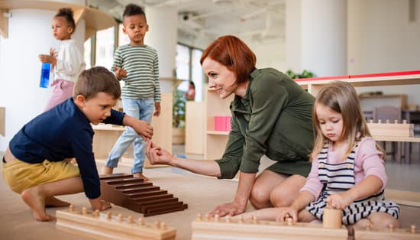
Thursday, 13 July 2023

What is the importance of studying for a 3-year-old preschooler?

Preschool marks the beginning of a child's educational journey, and while studying at such a young age may seem unusual for full time preschool in surrey, it holds immense importance in a 3-year-old's development. Early childhood education plays a crucial role in laying the foundation for future learning, socialization, and cognitive development. It lays the foundation for future learning, socialization, and cognitive growth. Early exposure to educational activities fosters cognitive development, language skills, and social and emotional growth, and ignites creativity and imagination. Moreover, it prepares children for the transition to formal education and instills a love for learning that will accompany them throughout their academic journey. 

preschool in surrey, childcare center, infant toddlers in surrey

Here are the key factors:

Cognitive Development-

Studying at a young age stimulates a child's cognitive development. Hence It introduces them to basic concepts, shapes, colors, numbers, and language skills. These early learning experiences lay the groundwork for future academic success. Engaging in age-appropriate educational activities fosters curiosity, problem-solving abilities, and critical thinking skills in young minds.

Language and Communication Skills-

Preschool is an ideal time for children to develop language and communication skills. hence Through studying, children are exposed to new vocabulary, sentence structures, and storytelling. Therefore They learn to express their thoughts and ideas, improving their verbal communication abilities. moreover Studying also enhances listening skills, as children must pay attention to instructions and engage in classroom discussions.

Social and Emotional Development-

Studying in a preschool setting encourages socialization and emotional growth. Hence It provides opportunities for children to interact with their peers, learn to take turns, share, and collaborate on projects. therefore These experiences teach them important social skills, such as empathy, cooperation, and problem-solving. Therefore Additionally, studying helps children develop emotional resilience, self-regulation, and a sense of independence.

Creativity and Imagination-

Preschool studying often involves artistic activities that nurture a child's creativity and imagination. Hence Through drawing, painting, storytelling, and pretend play, children develop their imaginative thinking and self-expression. These activities stimulate their cognitive abilities, foster innovation, and lay the groundwork for future creative endeavors.

Preparation for Formal Education-

Therefore Studying at a young age prepares children for the transition to formal education. hence It helps them develop essential skills, such as concentration, following instructions, and completing tasks. The structured learning environment of preschool introduces routines and expectations, preparing children for the academic demands of kindergarten and beyond.

Importance of studying for a 3-year-old preschooler:

Cognitive Development-

Studying at a young age stimulates cognitive development in preschoolers. It introduces them to basic concepts, shapes, colors, and numbers, helping them understand and make sense of the world around them. Hence Through studying, young children develop problem-solving skills, and critical thinking abilities, and improve their memory and attention span. These cognitive foundations form the basis for future academic success.

Language and Communication Skills-

Preschool studying supports the development of language and communication skills in 3-year-olds. Therefore They learn new vocabulary, and sentence structures, and engage in conversations with peers and teachers. Studying promotes active listening, language comprehension, and expressive communication, fostering effective verbal skills. These language abilities are crucial for future learning and social interactions.

Social and Emotional Development-

Engaging in studying at the preschool age facilitates social and emotional development. Therefore It provides opportunities for children to interact with their peers, learn social norms, and practice sharing, turn-taking, and cooperation. Studying activities often involve group work, encouraging children to collaborate, express their thoughts, and develop empathy. hence Through these experiences, preschoolers build positive relationships, develop self-confidence, and enhance their emotional intelligence.

Motor Skills and Coordination-
hence Studying involves various hands-on activities, hence such as drawing, coloring, cutting, and manipulating objects. These activities contribute to the development of fine motor skills and hand-eye coordination in preschoolers. Therefore As they hold pencils, use scissors, or manipulate small objects, they refine their motor skills and strengthen their dexterity, preparing them for tasks that require precision in the future.

Final Thoughts:

Therefore They develop important skills such as problem-solving, communication, collaboration, and fine motor abilities. Moreover, studying fosters a love for learning, ignites curiosity, and prepares children for the structured environment of formal education. By embracing studying at a young age, we provide preschoolers Montessori childcare near me with a strong foundation upon which they can build their knowledge, skills, and enthusiasm for lifelong learning.

The main aim is to provide a nurturing and stimulating environment where children can learn, play, and develop crucial skills needed for their future schooling and life. We are focused on holistic development, integrating cognitive, social, emotional, and physical activities into the daily routine.


Thursday, 1 June 2023

Infants and toddler steam concepts

The first year of life is an incredible journey of growth and development. Therefore  This period, commonly referred to as infancy, marks significant milestones as a child transitions from a helpless newborn into an active and curious toddler. Montessori Preschool in surrey is the perfect choice for you.

Moreover, It is a time when the foundations of physical and mental abilities, personality, and social relations are laid. As we understand more about these critical stages in an infant's life, we can better support their development and help set the stage for their future growth and learning. This article seeks to explore various aspects of infancy, including physical, cognitive, and socio-emotional development.


kidzville learning center, preschool in surrey, infant toddlers in surrey


The Importance of Early Steam Education:

Research suggests that the first few years of a child's life are critical for their cognitive, social, and emotional development. Moreover, During this time, children's brains develop at an unparalleled rate, making it an ideal period for introducing foundational STEAM concepts. Hence Early exposure to STEAM helps build problem-solving skills, fosters creativity, develops critical thinking, and instills a love for learning.  Moreover, Therefore It also helps prepare children for a future where these skills will be in high demand.

Integrating Steam into Everyday Activities:

Therefore The beauty of STEAM education for infants and toddlers is that it can be integrated seamlessly into everyday play and exploration.

Science-

Moreover, Infants and toddlers are natural scientists, constantly exploring the world around them. Encourage this by introducing different textures, colors, and sounds during playtime. Observe natural phenomena like rain, the growth of plants, or the change in seasons.

Technology-

Moreover, For this age group, technology doesn't refer to screens but to understanding cause and effect. This could involve simple machines like gears, wheels, or levers, and how they work. Toys that involve sorting, pushing buttons, or stacking can help with this understanding.

Engineering-

Moreover, Building with blocks, solving simple puzzles, or using objects for different purposes encourages engineering thinking. Even a toddler deciding to use a stool to reach something is beginning to think like an engineer!

Art-

Art plays a crucial role in enhancing creativity and expression. Allow children to engage in freeform painting, sculpting with clay, or making collages. Art is also an excellent medium for introducing patterns and geometry, integral components of STEAM education.

Mathematics-

Hence Early math skills can be developed through counting games, identifying shapes, or simple sorting activities. Everyday moments, like snack time or a walk in the park, offer opportunities to introduce concepts like 'more' or 'less', 'big', or 'small'.

The Role of Parents and Educators:

Hence Parents and educators play a crucial role in early STEAM education. It's important to provide opportunities for exploration and creativity, encourage curiosity, and allow children to learn at their own pace. Hence Asking open-ended questions, like 'What do you think will happen if...?' can stimulate critical thinking and problem-solving skills.

Therefore Remember, the goal isn't to produce toddler scientists or engineers but to create an environment that encourages curiosity, exploration, and creativity. Hence The benefits of early STEAM education will extend far beyond these early years, setting a strong foundation for future learning and success.

Final Thoughts:

Integrating STEAM concepts into the early learning journey of infants and toddlers is a highly effective way to promote cognitive development, foster curiosity, and instill a lifelong love for learning. It's not about making them miniature scientists or engineers.  So toddler montessori in Surrey can be a good choice for parents.

Kidzville Learning Centers is the leading platform for kids. If as a parent you're looking for the perfect learning point then this platform could be a nice choice for you. They help to develop their problem-solving skills, critical thinking, and creativity, which are fundamental skills for their future.


Friday, 19 May 2023

Why is childcare so expensive?

Childcare is a crucial service for working parents. Further, providing a safe and nurturing environment for their children while they are away. However, the high cost of childcare often leaves families wondering why it is so expensive. 

In this article, we will delve into the various factors contributing to the high price of childcare, shedding light on the complex nature of the industry and the challenges faced by childcare providers.


kidzvillelearningcenter, preschool, childcare center

Various Factors Are Responsible:

Strict Caregiver-to-Child Ratios-

These regulations ensure the safety and well-being of children by mandating that each caregiver can only oversee a limited number of children. For instance, many states require a ratio of one caregiver to every three or four babies. While this is essential for providing individual attention and quality care, it significantly increases labor costs for childcare providers. According to NPR® reports, labor is one of the most significant cost factors in childcare, making it challenging for providers to maintain profitability.


Location Considerations-

The location of a childcare center is vital in attracting parents and ensuring convenience. Centers need safe, accessible areas with ample indoor and outdoor space, compliant with regulations. However, securing such locations comes at a cost, and state requirements on square footage per child limit capacity and staffing.

Regulatory Compliance and Legal Counsel-

Childcare is an industry governed by numerous regulations and licensing requirements aimed at ensuring the safety and well-being of children. Navigating these complex regulations can be time-consuming and challenging for providers. 


In fact, Each jurisdiction may have its own set of rules, making compliance a complex and ongoing process. Providers often need to dedicate resources to understand and meet these requirements adequately. 


Moreover, Some providers may choose to seek legal counsel to ensure they are fully compliant and protected from potential lawsuits. The expertise of an attorney can help providers navigate the regulatory landscape and address any legal concerns that may arise.

Liability Insurance-

Operating a childcare facility comes with inherent risks and liabilities. To safeguard themselves and the children under their care, childcare providers must obtain liability insurance. This type of insurance protects against potential accidents, injuries, or damages that may occur on the premises. 


However, liability insurance can be costly, particularly for commercial centers that must meet stringent insurance requirements. It is important to note that liability insurance typically does not cover damage caused by children or injuries sustained by employees. Providers may need to obtain additional insurance policies to cover these specific areas, further adding to the overall cost.

Employee Recruitment and Training-

Ensuring the quality of care provided by the staff is paramount in the childcare industry. Childcare centers invest significant resources in recruiting and training qualified caregivers. The process of finding dedicated and skilled employees who are passionate about early childhood education is time-consuming and costly. 


Moreover, the competitive labor market demands competitive salaries and attractive benefits to attract and retain top talent. Providers need to invest in ongoing training and professional development programs to ensure their staff members stay updated with the latest best practices and regulations.

Increasing Fixed Expenses-

Childcare centers face rising costs of fixed expenses that are necessary for maintaining a safe and stimulating environment for children. Expenses such as food, maintenance, equipment, and toys contribute to the overall cost of childcare. 


Further, These costs are often beyond the control of childcare providers, as they are subject to market fluctuations and increasing prices in the broader economy. To provide high-quality care, providers must invest in these essential resources, which can result in higher fees for parents.

Marketing Costs-

Childcare providers need to invest in marketing efforts to attract families and maintain a steady enrollment of children. Traditional word-of-mouth referrals may not suffice in today's competitive landscape. Providers must establish a strong online presence, including a user-friendly website and active social media profiles. 


Additionally, they may need to engage in paid advertising, such as online ads or local promotions, to reach a broader audience. These marketing costs add to the overall expenses of childcare centers, which are ultimately reflected in the fees charged to parents.

Wrapping Up:

The high cost of childcare is a multifaceted issue influenced by various factors. In fact, Stricter caregiver-to-child ratios, location considerations, regulatory compliance, liability insurance, employee recruitment and training, increasing fixed expenses, and marketing costs all contribute to the overall cost of childcare. Next, Providers face significant financial responsibilities to ensure the safety, well-being, and educational development of the children in their care. 


Furthermore, the expense may seem daunting, but it is important to recognize the value that quality childcare brings to families and society as a whole. By understanding the complexities of the industry, parents can make informed decisions and providers can continue to offer exceptional care while addressing the challenges they face. 


Indeed, when it comes to dependable and excellent childcare services, it is worth exploring Kidzville Learning Centers preschool in surrey. With a strong commitment to children's well-being and development, they prioritize creating a nurturing and enriching environment. Don't hesitate to reach out to them for a brighter future for your child.

Tuesday, 18 April 2023

Do private daycares differ from Home daycares?

Choosing the right childcare for your child can be a tough decision, especially if you're trying to decide between a childcare center and home daycares. Both options have their pros and cons, so it's important to carefully consider your own needs and preferences when making your decision.

Childcare centers, also known as daycares centers, are typically larger facilities that offer care for children of all ages. These centers are usually licensed and regulated by the state, and they typically have a structured curriculum and daily schedule. Childcare centre often has multiple classrooms for different age groups, as well as outdoor play areas and other amenities.

Home daycares, on the other hand, are smaller facilities that are usually run out of someone's home. These daycares may be licensed or unlicensed, and they typically have a more relaxed and informal atmosphere. Home daycares often offer care for a smaller number of children, which can allow for more individualized attention and a closer relationship between the caregiver and the children.

So which option is better? It really depends on your own preferences and priorities.

childcarecenter, pre-school

Factors to consider when making your decision:

  • Cost: When it comes to cost, home daycares may be a more affordable option than childcare centers. This is because home daycares typically have lower overhead costs, such as rent and utilities, than larger childcare centers. However, it's important to note that the cost can vary depending on your location and the specific daycares providers you're considering. Some home daycares may charge more than others, and some childcare centers may offer more affordable options. When making your decision, consider not only the cost but also the quality of care and the other factors that are important to you and your family.

  • Curriculum: When it comes to curriculum, childcare centers typically have a more structured program in place, and may offer more educational activities and resources for children. These activities may include things like circle time, music and movement classes, and language and literacy development. Childcare centers may also have a specific educational philosophy or approach, such as Montessori or Reggio Emilia
  • Convenience: When it comes to convenience, there are different factors to consider for home daycares and childcare centers. Home daycares may be more convenient if you live nearby, as you won't have to travel as far to drop off and pick up your child. This can save you time and make your daily routine easier. However, it's important to ensure that the home daycare is still within a reasonable distance and that the location is safe and convenient for you and your child.
  • Socialization: When it comes to socialization, childcare centers typically offer more opportunities for children to interact with peers of different ages, backgrounds, and personalities. Children at childcare centers have the chance to socialize with other children in a group setting, which can help them develop social skills such as communication, sharing, and cooperation.
  • Regulation: When it comes to regulation, childcare centers are usually subject to more oversight and regulation than home daycares. This can provide some parents with peace of mind, as they know that the childcare center is following specific guidelines and regulations to ensure the safety and well-being of the children in their care.

Ultimately, the best choice for your family will depend on your own needs and preferences. Consider visiting multiple daycares, asking lots of questions, and taking your time to make an informed decision. With the right care, your child can thrive and grow in either a childcare center or home daycare.

It's important to do your research and consider visiting multiple daycares before making a decision. Don't be afraid to ask lots of questions about the daycares’ policies, procedures, and curriculum. Take your time to make an informed decision that feels right for you and your child. With the right care, your child can thrive and grow in either a childcare center or home daycare.

Conclusion:

In conclusion, there is no one-size-fits-all answer to the question of whether a childcare center or home daycare is better. Both options have their advantages and disadvantages, and the right choice for your family will depend on your individual needs and priorities. When making your decision, consider factors such as cost, curriculum, convenience, socialization, and regulation. Does your research, visit multiple daycares, and trust your instincts to find the best fit for your child. With the right care, your child can thrive and grow in either Montessori childcare in Surrey or home daycares.

10 Things to Consider When Selecting a Childcare Center in Surrey

When choosing a daycare and childcare center in Surrey , there are some things to consider to provide your child with a secure, caring, and ...